


Block paving driveways need regular re-sanding to maintain stability and appearance. Sand fills joints between blocks, preventing movement and weed growth.
Somerset’s clay soil and wet climate make proper jointing sand essential. Rain washes sand from joints over time. Weeds exploit gaps in poorly maintained joints.
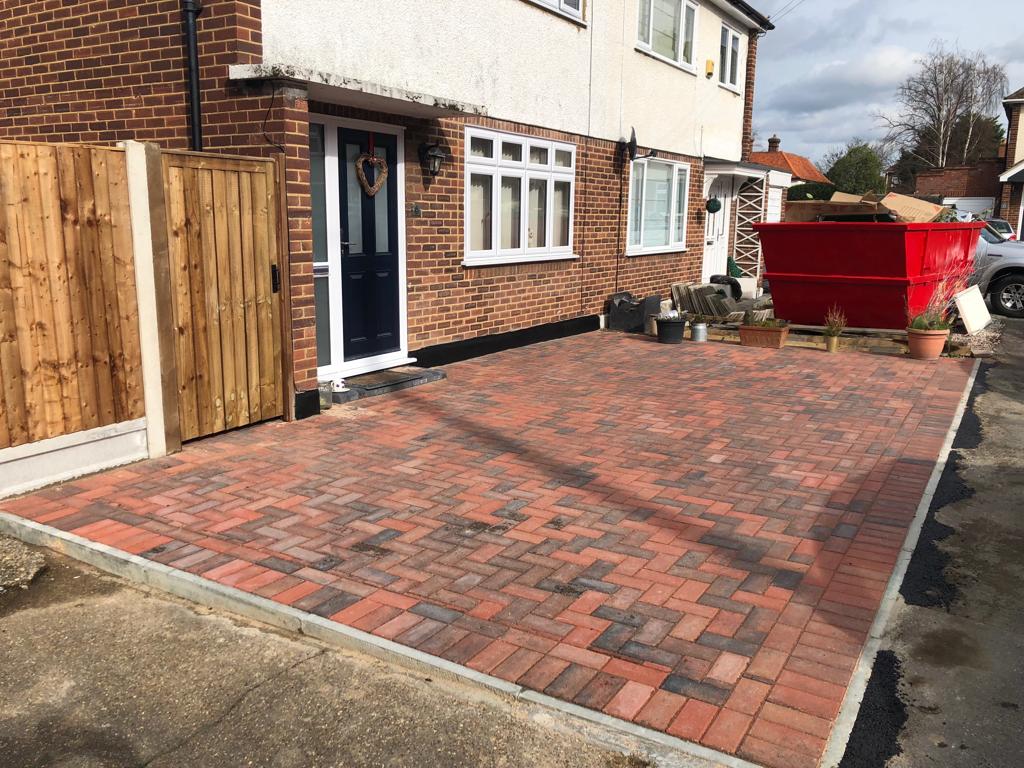
When to Re-sand Your Driveway
Inspect joints twice yearly. Re-sand when gaps exceed 5mm depth or weeds appear between blocks.
- After pressure washing
- Following weed removal
- When blocks feel loose underfoot
- After winter freeze-thaw cycles
For major repairs, professional paving contractors can assess whether full replacement is more cost-effective than ongoing maintenance.
Choosing the Right Sand
Sharp sand works best for block paving joints. Avoid builder’s sand or fine sand that washes away easily.
Kiln-dried sand prevents immediate weed germination. Polymeric sand hardens when wet, creating stronger joints but costs more.
Re-sanding Process
Clean joints thoroughly before adding new sand. Remove all debris, weeds and old sand remnants.
- Sweep sand across the surface
- Work sand into joints with a stiff brush
- Vibrate or tamp down gently
- Add more sand to fill remaining gaps
- Sweep excess sand clear
Maintenance After Re-sanding
Avoid washing the driveway for 48 hours. This allows sand to settle properly in joints.
Top up joints annually with fresh sand. Regular maintenance prevents major re-sanding work.